
When it comes to protecting your business from cyber threats, penetration testing is a crucial step. But you might be wondering—how much does penetration testing cost, and is it worth the investment?
You want clear answers without confusing jargon or vague estimates. Understanding the factors that influence the price can help you make smarter decisions and avoid overspending. You’ll discover what affects penetration testing costs, typical price ranges, and practical tips to get the most value for your budget.
Keep reading to unlock insights that will help you secure your digital assets without breaking the bank.
Cost By Test Type
Black-box testing means testing without any system knowledge. Testers act like outsiders trying to find weak spots. This method usually takes the most time and costs the most because testers must explore everything from scratch.
White-box testing gives testers full access to source code and system details. It is faster and costs less than black-box testing. Testers can quickly check all parts of the system for security holes.
Grey-box testing is a mix of black-box and white-box. Testers have some system knowledge but not full access. This method balances cost and depth, making it a popular choice for many companies.
Price Influencers
Testing methodology greatly affects the penetration testing cost. Black-box testing, where testers have no prior system knowledge, takes longer and costs more. White-box testing, with full access to source code and credentials, tends to be quicker but requires deep analysis.
Compliance requirements also influence pricing. Standards like PCI DSS or FedRAMP demand strict documentation and detailed processes, which raise the overall expense. Meeting these rules means more time and effort for testers.
The scope and scale of the test impact the price. Larger systems with many components cost more to test. Testing only critical assets reduces cost but might miss some risks.
Tools and technology used can change the price too. Automated tools lower time but may miss complex issues. Manual testing is thorough but takes longer and costs more.
Budget Optimization
Defining a clear scope helps focus on the most important systems. It stops testing unnecessary areas, saving money and time. Clear boundaries keep the project manageable and on budget.
Preliminary vulnerability scans use automated tools to find easy-to-spot problems fast. These scans reveal obvious risks before spending on deeper testing. Fixing these early lowers overall costs.
Prioritizing critical assets means testing the parts that matter most to the business. Protecting key data and systems first reduces risk significantly. It also ensures spending goes to the highest-value areas.
Pricing Models
Fixed price means you pay one set amount for the test. This is good for clear, simple projects. You know the cost upfront.
Hourly rates charge based on time spent. This fits complex or changing projects. Costs can vary.
| Pricing Model | Best For | Pros | Cons |
|---|---|---|---|
| Fixed Price | Simple scope, clear goals | Predictable cost, easy budgeting | Less flexible if scope changes |
| Hourly | Complex, evolving projects | Flexible, pay for actual work | Cost can grow unexpectedly |
Package deals bundle services for a set price. They often include multiple tests or follow-ups.
Custom quotes are tailored to your needs. Providers assess your system and goals before pricing.
Average Cost Ranges
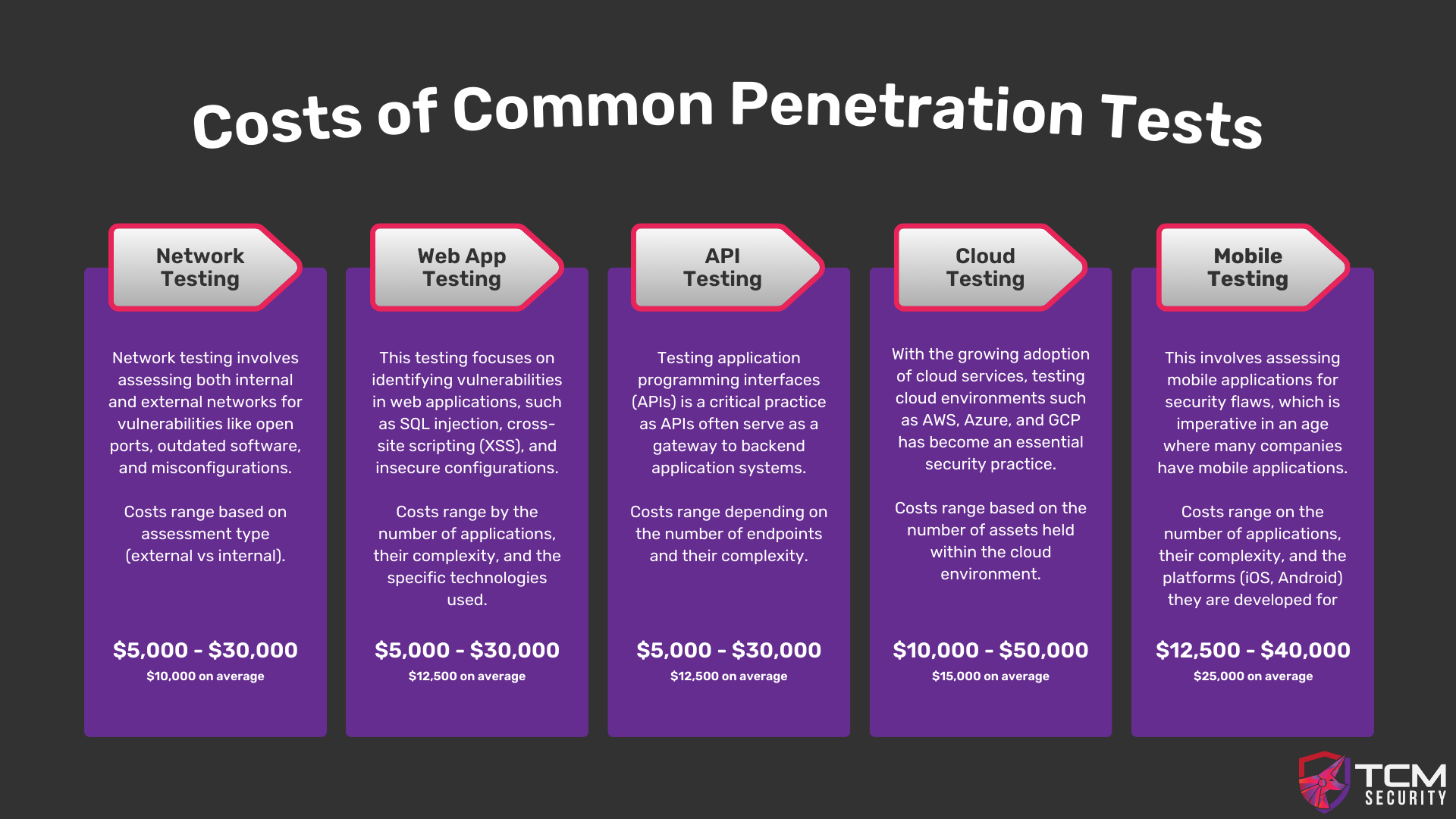
Small business testing usually costs between $4,000 and $15,000. These tests focus on key systems and are less complex. They often take a few days to complete.
Enterprise level testing ranges from $20,000 to $100,000 or more. Large companies have many systems to test. These tests involve more time and detailed analysis.
Specialized testing such as cloud or IoT security can cost $10,000 to $50,000. These require expert skills and specific tools. The price depends on the type and depth of testing.
Ai And Automation Impact
AI-driven pentesting uses smart tools to find security problems. It can run many tests quickly and cover more areas than manual checks. This boosts efficiency and lowers some costs. Machines handle routine tasks, so human experts focus on complex issues.
Testing speed improves because AI works nonstop and analyzes data fast. It can spot patterns humans might miss. This means faster reports and quicker fixes. Automation also reduces errors from manual work.
AI has limits. It cannot fully replace human judgment or creativity. Some vulnerabilities need expert thinking and experience. AI tools might miss new or unusual threats. Humans must review AI results to ensure accuracy.
Hidden Costs
Remediation expenses can add up fast after a penetration test. Fixing vulnerabilities often requires extra tools, patches, or even new hardware. These costs are usually not included in the initial test price.
Retesting fees come next. After fixes are made, the tester needs to check if the problems are resolved. This step ensures security improvements work well but can cost additional money.
| Hidden Cost | Description | Impact |
|---|---|---|
| Remediation Expenses | Costs for fixing identified security issues | Can be significant, varies by problem severity |
| Retesting Fees | Charges for verifying the fixes after remediation | Additional testing costs, sometimes charged hourly |
| Reporting and Documentation | Creating detailed reports and compliance documents | May require extra time and resources |
Reporting and documentation require time and care. Detailed reports help teams understand risks. Some reports meet compliance needs but may add to the total cost.
Choosing A Provider
Evaluating expertise is key when choosing a penetration testing provider. Check their certifications and years of experience. Experts should understand various testing methods and tools. Ask about their team’s background and past projects. This helps ensure they can find hidden security risks effectively.
Look for transparency in pricing. Providers should clearly list what services are included. Avoid hidden fees or vague cost descriptions. A detailed quote helps you compare offers fairly. Some companies charge by project size, others by hours. Knowing this upfront saves money and surprises.
Reputation and reviews matter a lot. Read feedback from previous clients. Positive reviews signal trust and good results. Beware of providers with many negative comments or no references. Good reputation often means reliable and thorough testing services.
Frequently Asked Questions
Is Pentesting Being Replaced By Ai?
AI enhances pentesting by automating tasks but cannot fully replace human expertise and creativity in security assessments.
Is Pentester Illegal?
Pentesting is legal only with proper authorization from the system owner. Unauthorized testing is illegal and punishable by law.
Do You Need Coding For Pentesting?
Basic pentesting requires coding knowledge to understand vulnerabilities and create exploits. Advanced skills improve testing effectiveness and customization.
What Is The Average Pay For Penetration Testing?
The average pay for penetration testing ranges from $70,000 to $120,000 annually in the United States. Experience and certifications influence salary significantly. Senior testers can earn over $130,000 per year. Location and industry also impact compensation levels.
Conclusion
Penetration testing costs vary depending on many factors. Testing type, scope, and compliance rules affect pricing. Clear goals help control expenses and focus efforts. Starting with vulnerability scans can reduce overall costs. Investing in testing protects your systems from threats.
Choose a service that fits your budget and needs. Regular testing keeps your security strong and updated. Understanding costs helps you plan better and stay safe.
Read More
- Network Security Risk Assessment: Ultimate Guide to Protect Your Data
- Data Breach Prevention Audit: Essential Steps to Secure Your Business
- Hipaa Security Compliance Audit: Essential Steps for Success
- Security Policy Review Checklist: Essential Steps for Ultimate Protection
- Enterprise Cyber Audit Cost: Essential Insights to Save Big
- Managed Security Audit Service: Boost Your Cyber Defense Today
- Vulnerability Assessment Services: Essential Steps to Secure Your Business
- Small Business Security Audit: Essential Steps to Protect Your Assets
- Cloud Security Audit Checklist: Essential Steps for Ultimate Protection
- Security Gap Analysis Report: Uncover Risks & Boost Protection